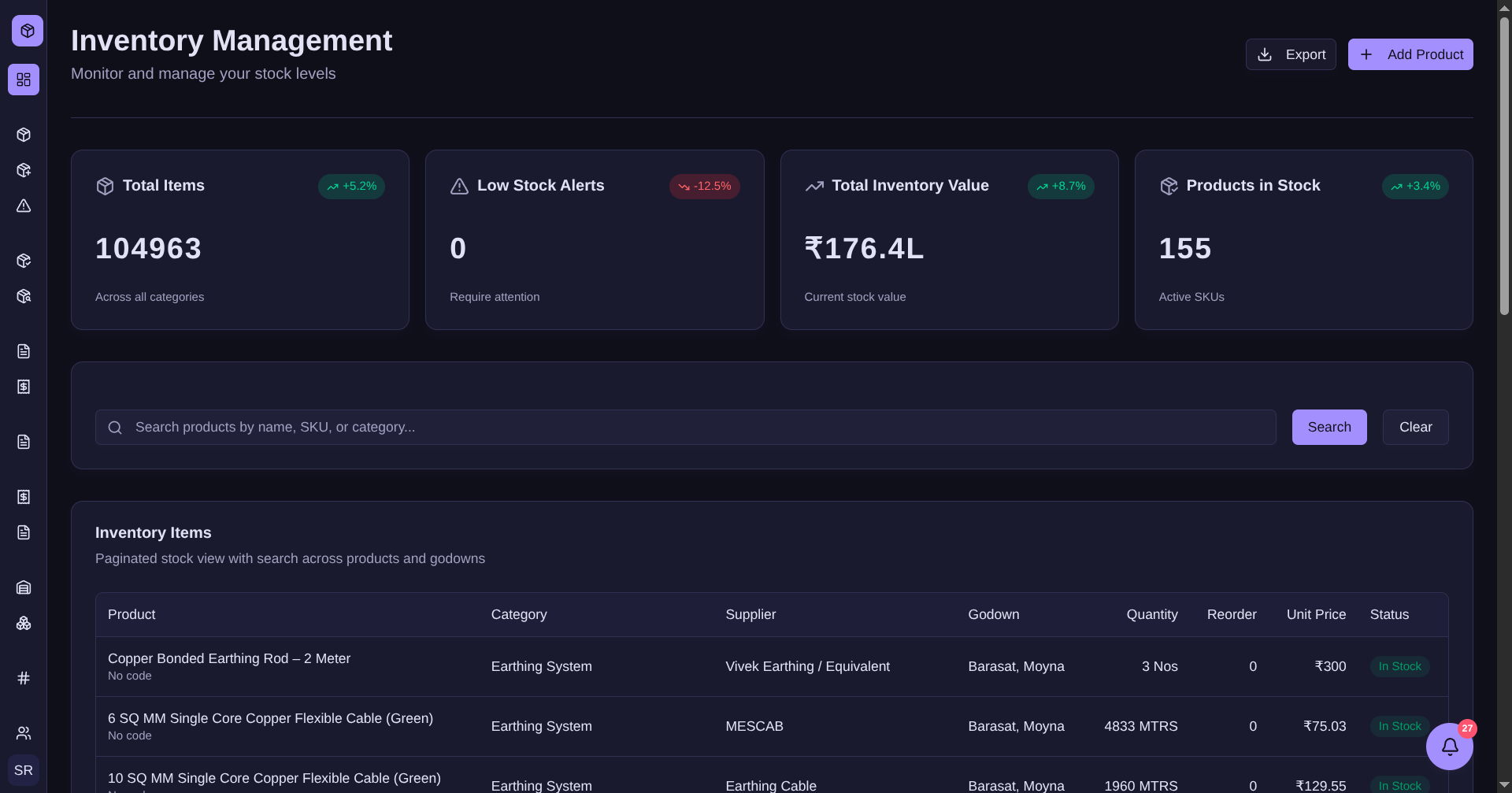
A solar hardware distributor running multiple godowns needed to know, at any moment, what was in stock, what was low, and what it was all worth — without stitching together separate spreadsheets for products, purchase invoices, and expenses. Stock transfers between locations happened over phone calls and messages, with no serial-level record.
The brief: one internal platform covering products, stock movement, purchasing, and project spend, usable by a small team without a dedicated ops hire.
The dashboard is organized around six real operational groups — Products, Stock Management, Expense Management, Project Management, and Purchase Invoices sit in the sidebar as distinct sections rather than one generic "inventory" catch-all, matching how the team actually splits the work day to day.
Serial-level tracking (Find Product by Serial) and inter-location Stock Transfer were built in as first-class actions, not afterthoughts, since misplaced or unaccounted stock was the original source of pain. Low Stock Alerts surface reorder risk before it becomes a stockout.
With six-figure item counts, the product and inventory tables are paginated and searchable from the dashboard itself, so the team isn't scrolling through tens of thousands of rows to find one SKU. Total inventory value and active SKU counts are computed and surfaced live on the landing dashboard.
Purchase invoices and expenses live in the same system as stock, so a new delivery updates inventory counts and cost basis in one place instead of two disconnected records.
We went from three spreadsheets and a lot of guessing to one dashboard that tells us exactly what we have and what it's worth.
A live view of item counts, inventory value, and low-stock risk across every godown, paginated for six-figure item counts.
Inter-location stock transfers and purchase invoices tied directly into the same inventory records.
Role-based access to a single internal tool replacing spreadsheets across products, stock, and spend.